Naps by Age: 0–12 Months
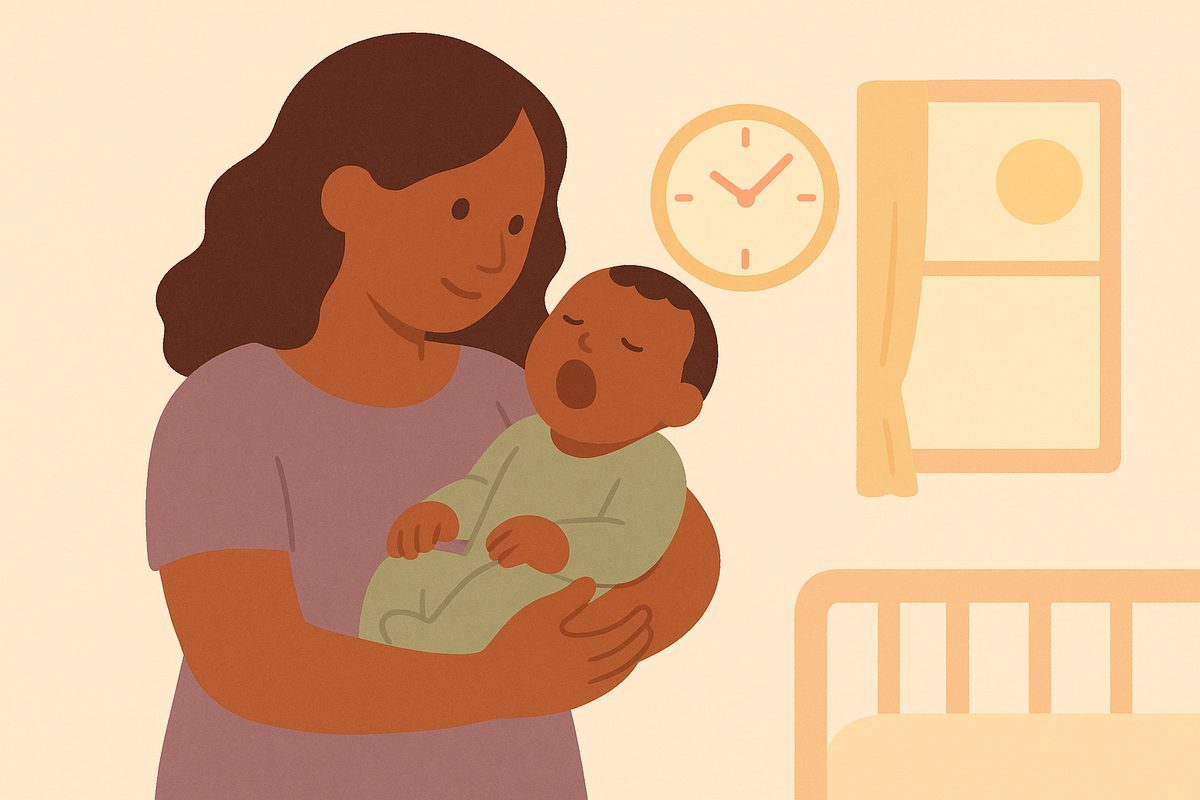
Daytime sleep changes more in the first year than at any other time. Knowing the typical pattern for each stage helps you work with your baby's biology instead of against it.
The rough map
- **0–3 months:** no schedule — expect 4–6 scattered naps of wildly varying length, guided by short 45–90 minute wake windows. Catnapping is completely normal.
- **3–5 months:** things begin to organize into roughly 3–4 naps as the body clock matures. The morning nap usually becomes predictable first.
- **6–8 months:** most babies settle into 3 naps, then drop to 2 (morning and early afternoon) somewhere around 7–9 months. Total daytime sleep is usually 2.5–4 hours.
- **9–12 months:** a fairly steady 2-nap rhythm for most, with total sleep around 12–16 hours per 24 including nights. The shift to one nap typically comes later, around 13–18 months.
Spotting a nap transition
Signs a nap is ready to go: consistently fighting the last nap of the day, taking forever to fall asleep at bedtime, or early-morning waking that persists for a week or two. Transitions are bumpy — expect a few weeks of some days on the old schedule, some on the new.
Nap-friendly habits
- Watch sleepy cues (rubbing eyes, zoning out, fussing) alongside the clock.
- Use a consistent mini wind-down: dark room, sleep sack, a song.
- Naps follow the same safety rules as nights: back-sleeping, clear crib.
- Don't chase perfection — a car nap or a short one now and then is fine. Averages over a week matter more than any single day.
*Always consult your pediatrician for advice specific to your baby.*
Sources
Stop calculating every sleep window
Bloomie Rhythm uses recent sleep logs and age-appropriate ranges to estimate when winding down may help.
Get Bloomie Rhythm