Starting Solids Around 6 Months
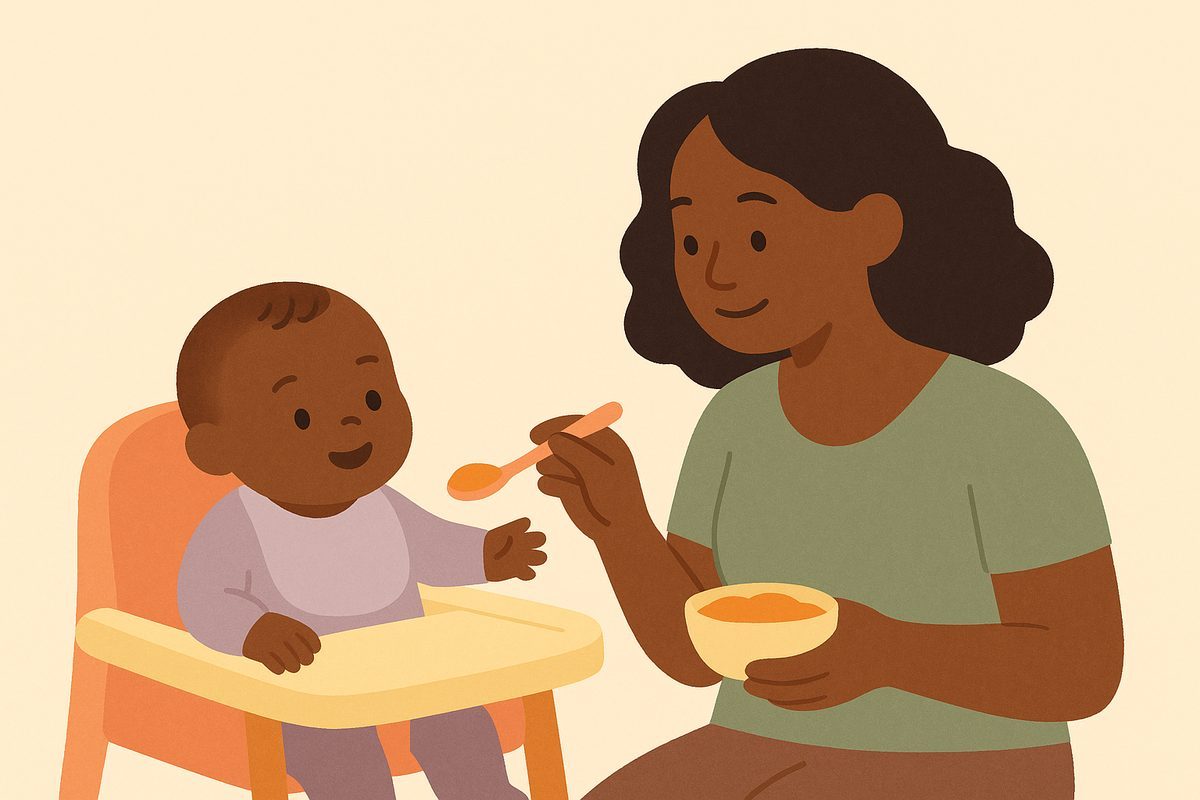
Major health bodies including the AAP and WHO recommend introducing solid foods at around 6 months, alongside continued breast milk or formula. Milk remains your baby's main nutrition well into the first year — early solids are about learning, tasting, and building skills.
Signs your baby is ready
Age matters less than readiness. Look for all of these, usually appearing close to 6 months:
- Sits upright with minimal support and holds their head steady.
- Has lost the tongue-thrust reflex that pushes food back out.
- Shows real interest — watching your fork, reaching, opening their mouth.
Wait on solids before 4 months; a baby's gut and oral skills simply aren't ready.
Good first foods
There's no strict required order. Aim for variety and, importantly, iron — babies' iron stores start running down around 6 months:
- Iron-rich options: iron-fortified baby cereal, well-cooked pureed or shredded meat, beans, lentils, tofu.
- Vegetables and fruits: mashed or soft-cooked, single ingredients at first if you prefer.
- Offer solids once a day to start, building up gradually to 2–3 times daily by 9 months.
Avoid honey before 12 months (botulism risk), added salt and sugar, whole nuts, and cow's milk as a main drink before age one (small amounts in cooking are fine).
Keep it low pressure
Expect funny faces, spat-out food, and tiny amounts eaten — that's learning, not rejection. It can take 10 or more exposures before a food is accepted. Sit baby upright, always supervise, follow their cues, and stop when they turn away. Mealtimes that stay relaxed now build a happier eater later.
*Always consult your pediatrician for advice specific to your baby.*
Everything in this guide, matched to YOUR baby
Daily play plans, CDC milestones, trackers — and CrySense, which reads your own logs when the crying starts.
Get Bloomie free