Fever: What to Do, When to Call
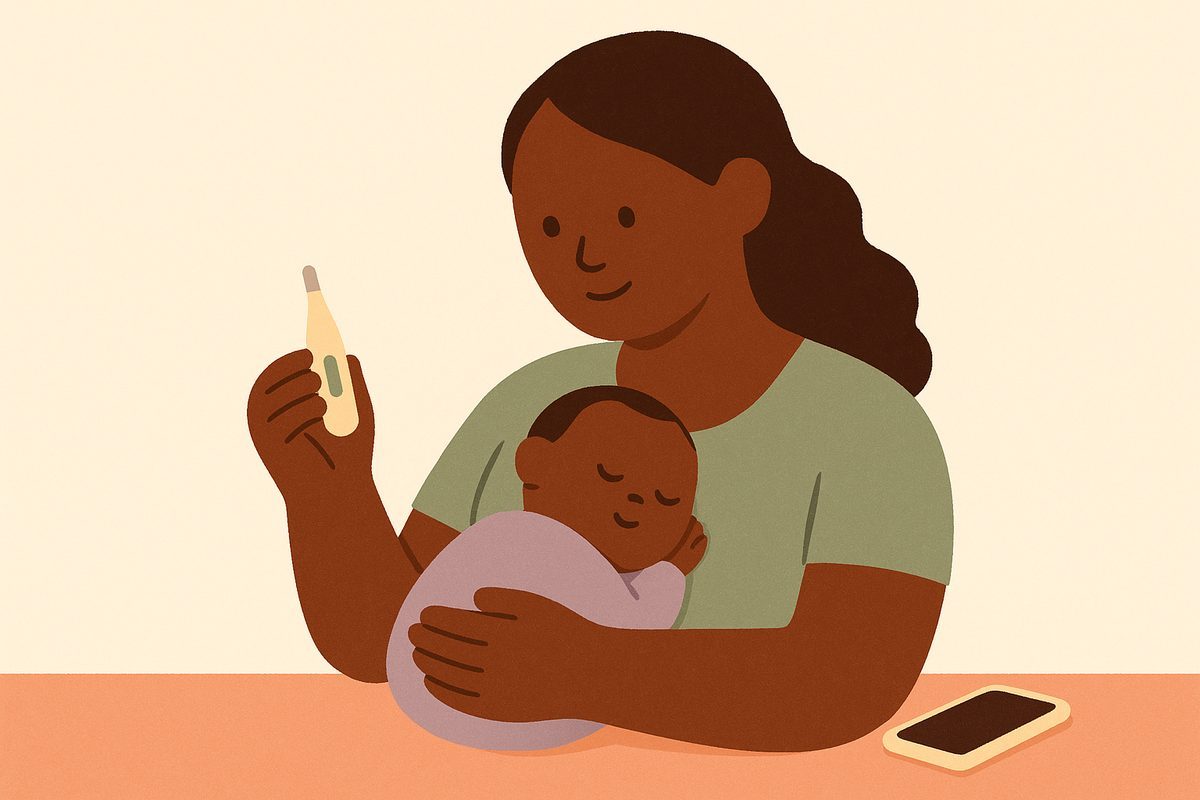
A fever is a temperature of 100.4°F (38°C) or higher, and it's usually a sign the immune system is doing its job — most childhood fevers are caused by everyday viruses. Your job is to keep baby comfortable and know the red lines.
The non-negotiable rule
**If your baby is under 3 months old and has a rectal temperature of 100.4°F (38°C) or higher, call your doctor or seek urgent care immediately** — even if they seem fine. Young infants can't fight infection well, and this always needs same-day assessment.
Taking a temperature
A rectal thermometer is the most accurate for babies under about 6 months; follow the device instructions and use a dab of petroleum jelly. Forehead (temporal) thermometers are a reasonable alternative. Skip ear thermometers before 6 months and don't rely on touch alone.
Caring for a feverish baby (3 months+)
- Treat the child, not the number — the goal is comfort, not a perfect reading.
- Offer plenty of breast milk or formula; hydration matters most.
- Dress them lightly; don't bundle or cold-sponge.
- Ask your pediatrician about infant acetaminophen dosing (from 3 months, weight-based). Ibuprofen is an option from 6 months. **Never give aspirin.**
Call the doctor if
- Fever in any baby under 3 months, as above.
- Fever above 104°F (40°C), or lasting more than 24 hours in a baby under 2, or persisting 2–3 days.
- Baby is unusually drowsy, floppy, inconsolable, refusing feeds, has few wet diapers, a rash that doesn't fade under pressure, trouble breathing, or a seizure — seek emergency care for these.
Trust your instincts: if they seem really unwell, call regardless of the thermometer.
*Always consult your pediatrician for advice specific to your baby.*
Everything in this guide, matched to YOUR baby
Daily play plans, CDC milestones, trackers — and CrySense, which reads your own logs when the crying starts.
Get Bloomie free